
[Updated: May 28, 2026 | Published: May 28, 2026]
What is Montessori-Inspired Memory Care and is it Right for You?
What is it, how it works, and what families should look for when exploring memory care options.
You Want More Than Basic Memory Care
Most families begin researching memory care after noticing small but significant changes. Conversations become harder. Routines slip. Safety becomes a growing concern.

Some families have time to research carefully. Others need answers quickly.
Either way, the goal is usually the same: finding a community where someone you love feels safe, respected, and genuinely known as a person.
That’s why many families are now exploring Montessori-inspired memory care. This approach focuses on preserving independence, connection, and purpose in daily life.
As you compare memory care communities in Dublin, Ohio, and the greater Columbus area, it helps to understand what the model looks like in practice and what current research says about its impact.
What Is Montessori-Inspired Memory Care?
Montessori-inspired dementia care emerged from the work of psychologist Dr. Cameron Camp in the 1990s. He recognized that the principles Maria Montessori developed for learning environments could also support people living with dementia.
The philosophy shifts the focus from loss to retained ability.

Instead of centering care around symptoms and supervision, Montessori-inspired communities look for ways to support what Residents can still do. That may include participating in familiar routines, making small daily choices, helping with meaningful tasks, or engaging through music, art, gardening, conversation, or sensory activities.
Care teams also spend time learning each Resident’s personal history, preferences, routines, and interests. That information becomes part of daily care, inspiring a more personal, less clinical approach.
What Does Montessori-Inspired Care Look Like Day to Day?
In a Montessori-inspired setting, trained dementia care associates encourage Residents to remain active participants in their day whenever possible. Choices stay simple and manageable, but they are real choices: where to sit, which activity to join, whether to spend time socially or quietly, or how to structure part of the day.

That sense of autonomy matters. Even small choices help people living with dementia feel more confident, calm, and connected to daily life.
Staff members get to know Residents beyond their care needs. Conversations draw on a person’s former career, hobbies, favorite music, family traditions, or longtime routines. Those details help caregivers redirect anxiety, create familiarity, and build trust.
The physical environment also plays an important role. Many Montessori-inspired communities use clear layouts, calm lighting, familiar visual cues, and comfortable gathering spaces to reduce confusion and support confidence.
Activities are designed to help Residents contribute, engage, and experience moments of purpose. Gardening programs, music therapy, household activities, discussion groups, and intergenerational programs are built around participation.
What the Research Shows
Montessori-based dementia care has been studied internationally for more than two decades.
A 2023 systematic review published in Dementia (London) analyzed 15 studies conducted across several countries, including the United States, Canada, Australia, Taiwan, and China.
Several consistent findings appeared across the studies. Residents showed higher levels of engagement during activities and social contact. Several communities reported meaningful reductions in agitation and distress. Reliance on antipsychotic or sedative medications decreased in several settings. Staff satisfaction and quality of interaction also improved.
Like much dementia research, these studies continue to evolve, and researchers call for more long-term data. But the findings support what many families and care teams already observe. People living with dementia often respond positively when care emphasizes familiarity, dignity, routine, and meaningful participation.
Who Is a Good Fit for Montessori-Inspired Memory Care?
This model often appeals to people who have spent much of their lives valuing independence, activity, routine, and social connection.
It may also benefit those who respond better to reassurance and redirection than to correction or rigid structure.
Families who want to stay closely involved in care planning also tend to appreciate the approach. Personal history matters in Montessori-inspired care, and family members often provide the stories, routines, preferences, and life details that help caregivers create stronger daily connections.
What Families Should Watch for During a Tour
Not every community that references Montessori principles applies them in the same way.
During a visit, pay attention to routine interactions.

Notice whether staff members speak naturally with Residents or move quickly from task to task. Watch for eye contact, familiarity, patience, and conversation.
Ask questions such as:
- How do caregivers learn about a Resident’s life history?
- How are personal interests incorporated as part of daily routines?
- What happens when a Resident becomes anxious or upset?
- How does the community encourage involvement and interaction?
- What training do caregivers receive in dementia communication?
The Residents themselves often tell you the most. Do people appear engaged? Comfortable? Connected to their surroundings? Does the environment feel calm and active rather than quiet and disengaged?
What Montessori-Inspired Care Looks Like at Rowan House
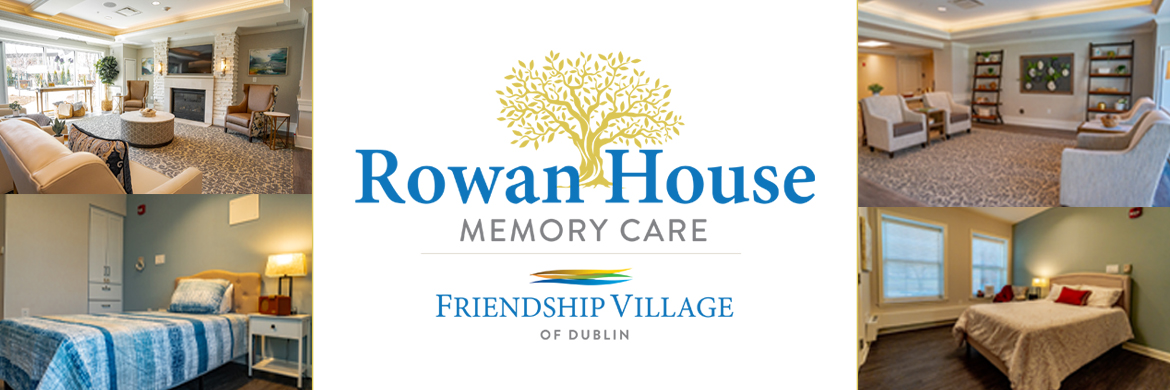
Rowan House Memory Care was designed from the ground up around Montessori-inspired principles. It opened in May 2023 as part of the full continuum of care on our 29-acre campus in Dublin, Ohio.
The community includes 26 private studio apartments arranged in small, residential-style neighborhoods. Circular walking paths support movement and navigation. Big windows, circadian lighting, and sensory spaces help create a calmer, dementia-friendly environment.
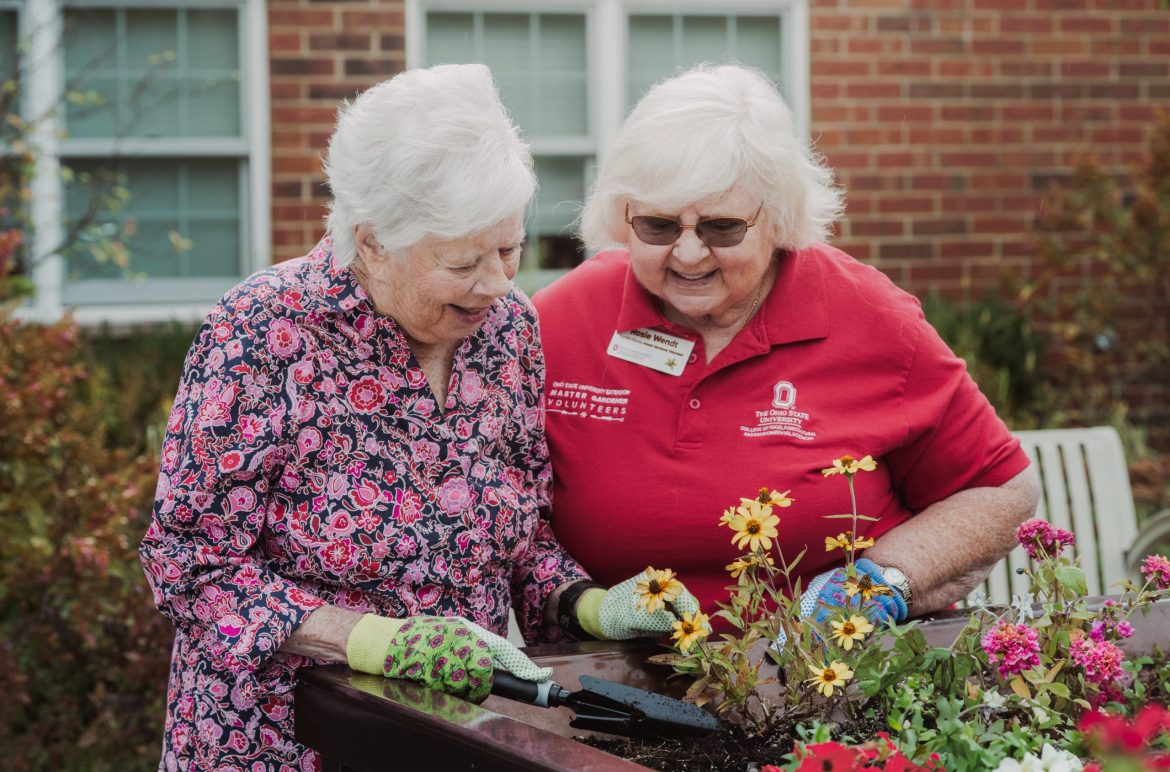
Programs emphasize participation and purpose. Through the Friendship in Bloom horticulture program, for example, Residents help plant, tend, and harvest flowers and plants. We developed this program in partnership with The Ohio State University Master Gardener Program.
Art, music therapy, and intergenerational experiences follow the same philosophy: Residents actively participate rather than simply observe.
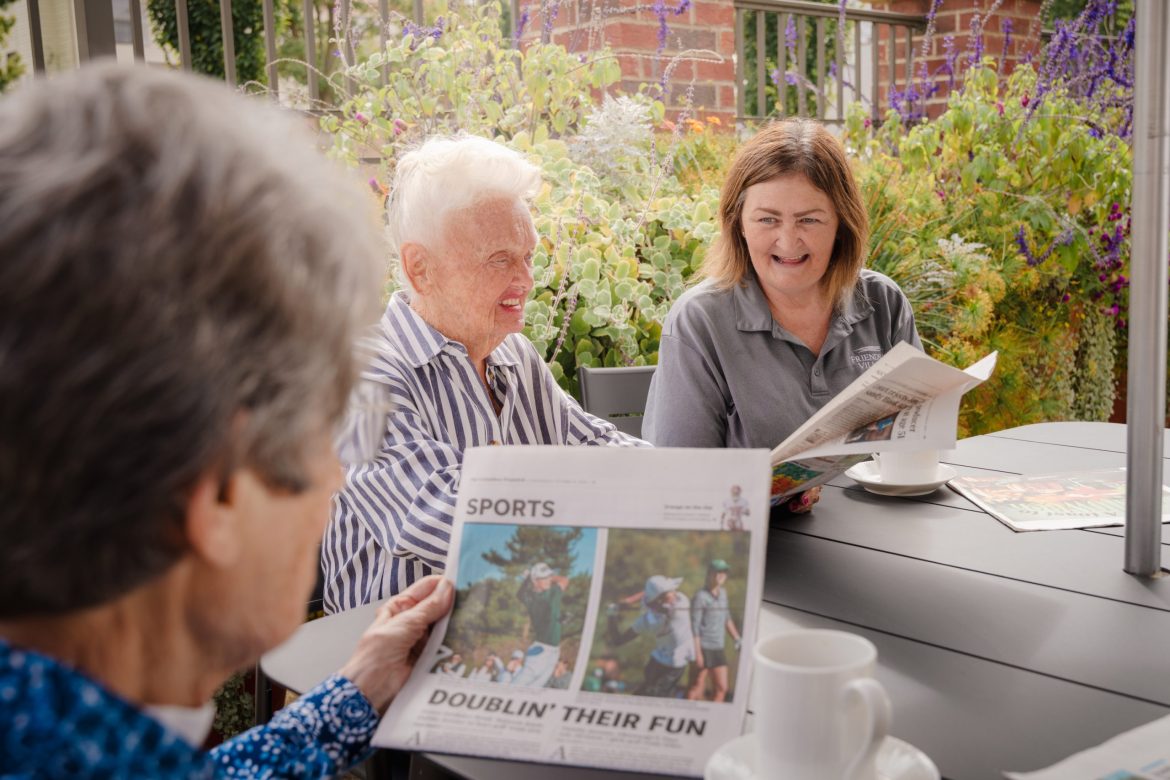 Certified Dementia Practitioners are available around the clock. The community’s 26-suite design allows care teams to build genuine bonds with Residents and lasting partnerships with their families.
For families navigating the logistics of a move, Rowan House offers a dedicated move-in counselor who guides the process from start to finish, from downsizing support to space planning to a personal welcome on arrival day.
Rowan House has earned the Gold Montessori Inspired Lifestyle® credential from the Center for Applied Research in Dementia. This is the organization’s highest recognition, earned using rigorous evaluation, adherence to extensive operational standards, and a long-term commitment to best practices in dementia care.
How to Know When You’ve Found the Right Community
Choosing memory care is one of the most significant decisions a family makes. It requires balancing emotional, medical, financial, and practical realities.
The right community usually feels different in ways that are difficult to script.
Staff members speak about Residents with specifics rather than generalities. Interactions appear personal. Residents appear engaged in daily life rather than supervised through it.
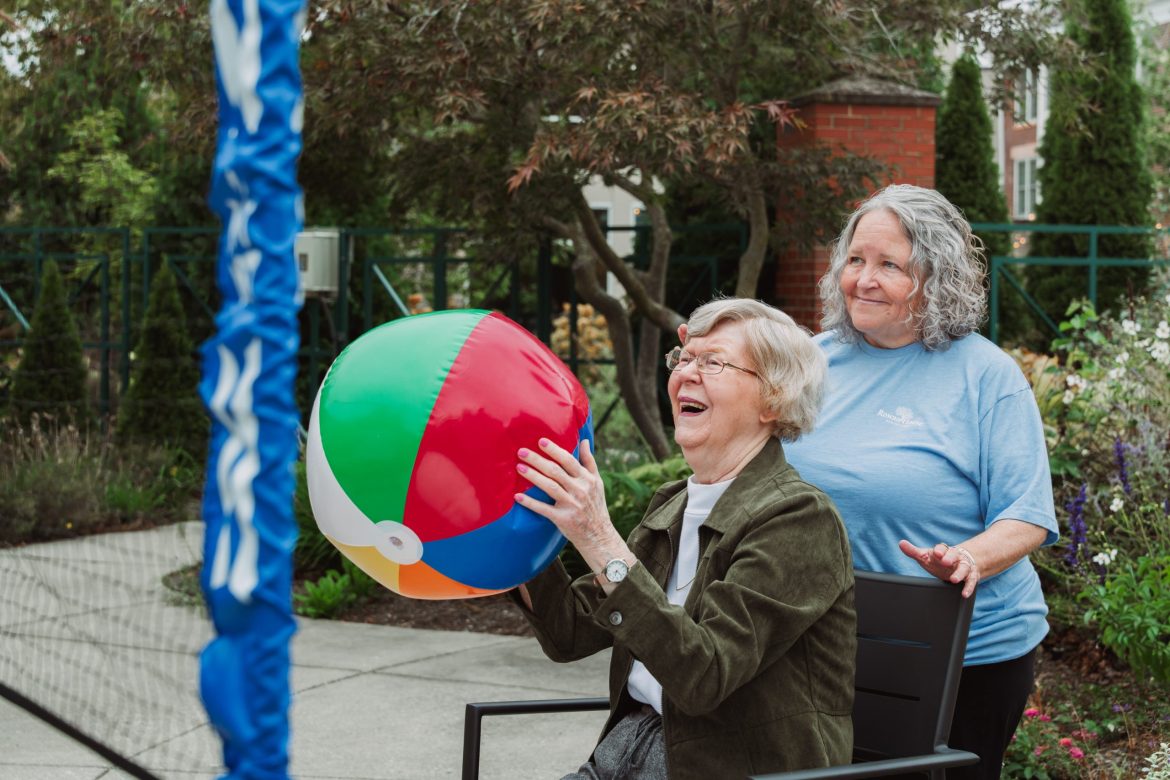
A strong memory care community supports safety while protecting dignity, connection, routine, and purpose.
If you’re exploring memory care options in Dublin or the greater Columbus area and want to learn more about Montessori-inspired care, Rowan House at Friendship Village of Dublin is here to help. If you’re beginning the search, you don’t have to explore it alone. Call or visit us for personalized tours and conversations designed to help families understand their options.
Call 614-717-1600 to learn more about Rowan House Memory Care from a resident relations specialist, or click the link below to schedule an in-person tour.
Frequently Asked Questions About Montessori-Inspired Memory Care
What is Montessori-inspired memory care?
Montessori-inspired memory care is an approach to dementia care that emphasizes retained ability, personal history, meaningful activity, and choice. Rather than focusing primarily on symptoms and supervision, it looks for ways to support what people living with dementia can still do successfully, with dignity and purpose.
Is Montessori-inspired dementia care evidence-based?
Yes. A 2023 systematic review in the peer-reviewed journal Dementia (London) analyzed 15 international studies and found consistent improvements in resident engagement, reductions in agitation, and decreased reliance on antipsychotic medications in communities using this approach.
How is Montessori memory care different from traditional memory care?
Traditional memory care focuses primarily on safety, medical oversight, and symptom management. Montessori-inspired care builds on that foundation with a strength-based philosophy: learning each person’s history and preferences, offering real choices throughout the day, and designing programming around active participation rather than passive activities.
Does Montessori care help people with Alzheimer’s disease?
Research supports its use for people living with Alzheimer’s disease and other forms of dementia. The approach works with preserved abilities rather than lost ones, which can remain meaningful even as Alzheimer’s progresses. Music, customary routines, sensory engagement, and meaningful tasks often reach people in ways that purely clinical interactions cannot.
What stage of dementia benefits most from Montessori-inspired care?
Montessori-inspired care is designed to be adapted across all stages of cognitive decline. In earlier stages, it supports independence and engagement. In later stages, it emphasizes sensory connection, familiar music, routine, and personal comfort. The approach adjusts to where a person is rather than expecting the person to adjust to the program.
How do Montessori memory care communities reduce anxiety and agitation?
By building the day around familiar routines, personal preferences, and manageable choices, Montessori-inspired communities reduce the disorientation and loss of control that often drive anxiety and agitation in dementia care. Staff are trained in dementia communication techniques, and environments are designed to feel calm, navigable, and reassuring.
What should families look for during a memory care tour?
Watch how staff interact with Residents when no one is observing. Look for eye contact, patience, and natural conversation. Ask how caregivers learn about a new Resident’s personal history and how that information shapes daily care. Notice whether Residents appear engaged and connected or idle and withdrawn. The environment, the people, and the interactions together tell you much of what you need to know.
A Winning Recipe: Friendship Village of Dublin Culinary Team Claims Top Honor at Taste of New Albany

[Updated: August 24, 2026 | Published: August 7, 2026] Delicious.…