
[Updated: April 16, 2026 | Published: April 16, 2026]
How to evaluate quality, ask the right questions, and make a confident decision, quickly.
You Probably Didn’t See This Coming
Most people don’t start looking for a nursing home until something forces them to.
 A fall leads to a hospital stay. A diagnosis changes everything. Or you’ve reached the point where everyone involved — the doctors, the family, maybe even the person themselves — knows that home is no longer safe and ongoing medical support is the answer.
You may not feel ready. Most people don’t.
But if you’re starting to think a nursing home may be the right next step for you or someone you love, two questions rise to the top pretty fast: How do you find one that will meet your needs? And how do you make a sound decision when you’re already under pressure?
What is a Nursing Home, Exactly?
Think of a nursing home as a place to live where medical care comes to you — in your private or semi-private room, around the clock — rather than you having to go to it. The best nursing facilities offer more comfort, freedom, and social interaction than you’ll find in a hospital.
In more technical terms, a nursing home is a licensed care setting with 24-hour medical oversight, clinical staffing, and help with daily living for people who can no longer safely manage at home. In Ohio, that license comes from the Ohio Department of Health, which inspects nursing homes and certifies that they meet minimum staffing, safety, and medical care standards.
You may also hear the term “skilled nursing facility.” That’s the same thing; it’s just the term hospitals, Medicare, and insurance companies use. The word “skilled” signals that doctors, nurses, and therapists are part of your care team.
Most nursing homes also handle short-term rehabilitation after a hospital stay, long-term care for ongoing medical needs, and support for people with complex health conditions.
Friendship Village of Dublin Is More Than a Nursing Home
If you found this guide through a web search for nursing homes, there’s something worth knowing before you go further.
Friendship Village of Dublin is a LifeCare community. We provide a full continuum of living, not a single level of care. Most of our Residents arrive while they’re still active and independent. They’re drawn by the campus, the community, and the security of knowing that if their needs ever change, they won’t have to start over somewhere new.
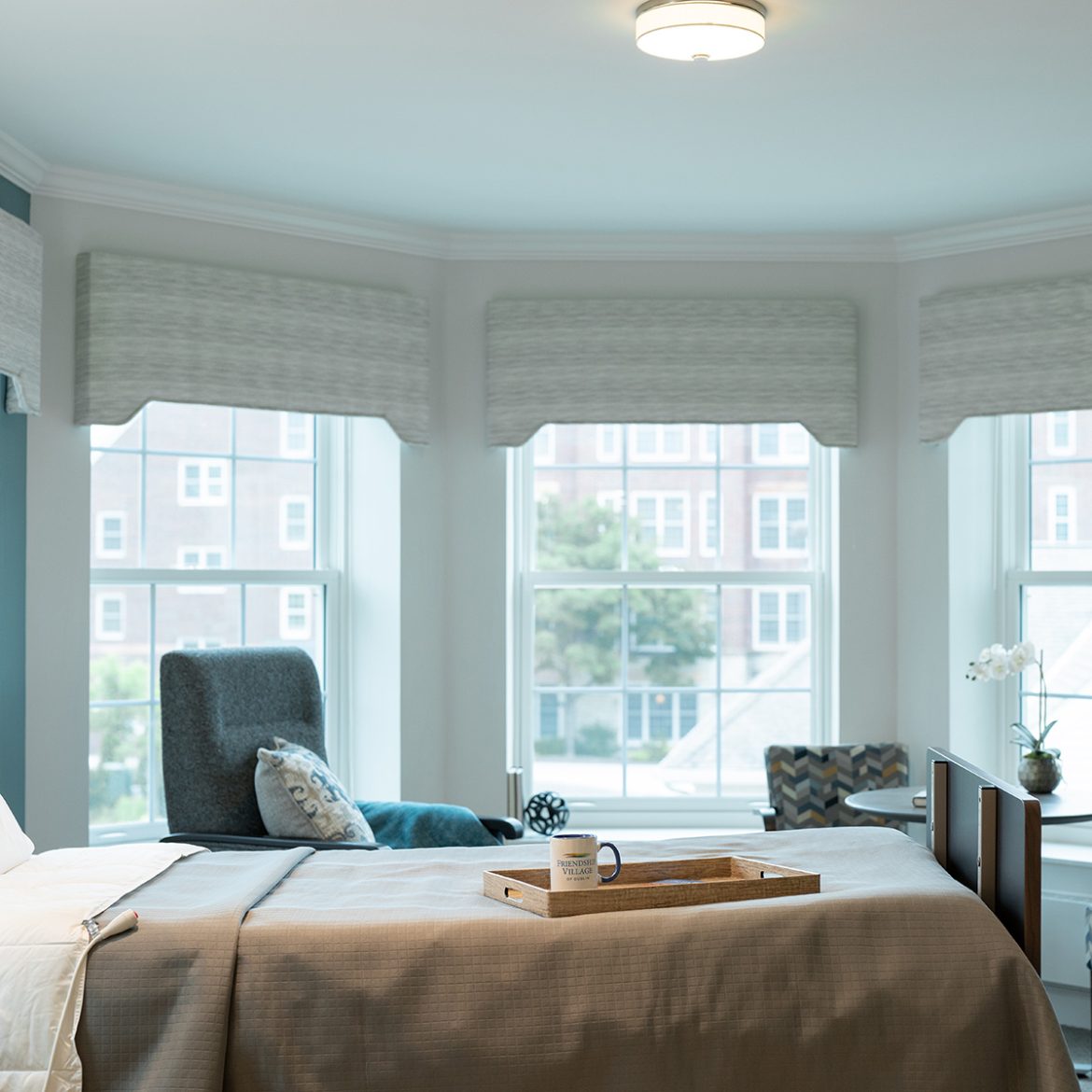
We offer skilled nursing care through Alderwood Health & Rehab. Alderwood provides short-term rehabilitation after hospital stays, long-term care for people with ongoing medical needs, and on-site licensed nursing at all hours.
It’s an important part of what we offer, but it’s one part of a community that also includes independent living, assisted living, and memory care. All on the same campus, all supported by the same team. Residents have access to other levels of care if their needs change, without having to move to an unfamiliar location. For many families, that continuity matters as much as the care itself.
Our current Residents have priority access to Alderwood, but we do accept direct placements when space is available.
We’re sharing this guide because the information in it matters, whether you’re thinking about Friendship Village of Dublin or evaluating options elsewhere. If nursing home care is what you or someone you love needs right now, we want to help you make the best possible decision for them.
Who Needs Nursing Home Care?
Nursing home care is typically the right answer when someone can no longer manage basic daily tasks — bathing, dressing, eating, getting in and out of bed — without hands-on help. It’s also the right level of care for those who have serious or complex medical needs, such as recovering from a stroke or major surgery, managing advanced heart failure, severe diabetes complications, COPD, or significant dementia.
A physician must certify that a person meets the “nursing facility level of care” before admission. That assessment looks at physical function, medical needs, cognition, and behavior, not just age or diagnosis.
In practice, most nursing home Residents are adults 75 and older, often 85 and up, whose needs have grown beyond what home care or assisted living can safely provide. Many arrive after a hospital stay, not yet well enough to go home but no longer needing hospital-level care. Others have been managing at home with increasing difficulty until a health event makes it clear that more support is needed.
If you’re not sure whether this level of care is the right fit, that’s a conversation worth having with the person’s physician before a crisis forces the decision.
Fewer Beds, More People Who Need Them
Finding a good nursing home has always taken time. It’s taking longer today.
According to a 2023 study published in JAMA Network Open, the number of Americans age 65 and older grew by about 28% between 2011 and 2019, while the number of licensed nursing home beds actually fell slightly. Available beds dropped from roughly 559 per 10,000 older adults in 2011 to about 445 by 2019. That’s a decline of nearly 20%.
Then COVID made things worse. A 2026 study published in JAMA Internal Medicine found that nursing home operating capacity — beds that can realistically be staffed and used — dropped about 5% between 2019 and 2024. That translates to nearly 4,000 fewer beds available for new patients every single day. About one in four U.S. counties saw operating capacity drop by 15% or more, with rural areas hit hardest.
Ohio reflects these national trends and, in some ways, amplifies them.
The state’s 80-and-older population was about 500,000 in 2020, according to projections from the Scripps Gerontology Center at Miami University. It’s projected to grow nearly 20% by 2030 and more than 50% by 2040. Meanwhile, according to LeadingAge Ohio, the state’s licensed nursing facility beds peaked at around 94,700 in 2011 and fell to roughly 88,800 by 2019 — a drop of about 6% while the oldest age groups were growing.
Staffing shortages tighten things further. More than one-third of Ohio nursing homes reported they couldn’t fully staff their floors — and the shortage hasn’t improved. When facilities can’t staff their beds, those spaces effectively don’t exist for families who need them.
Assisted living has expanded to fill some of the gap. But assisted living serves people with lower medical needs. It isn’t a substitute for nursing home care for the oldest and sickest adults.
The population needing nursing home care is growing rapidly and will continue to increase well into the future. The supply of beds that can actually serve them is not keeping up. In the Columbus area, as elsewhere, families who start looking early have more choices than those who wait until a health crisis forces the decision.
What to Look for When You Visit a Nursing Home
All nursing homes advertise excellent care. Here’s how to evaluate the claims.
Physical environment
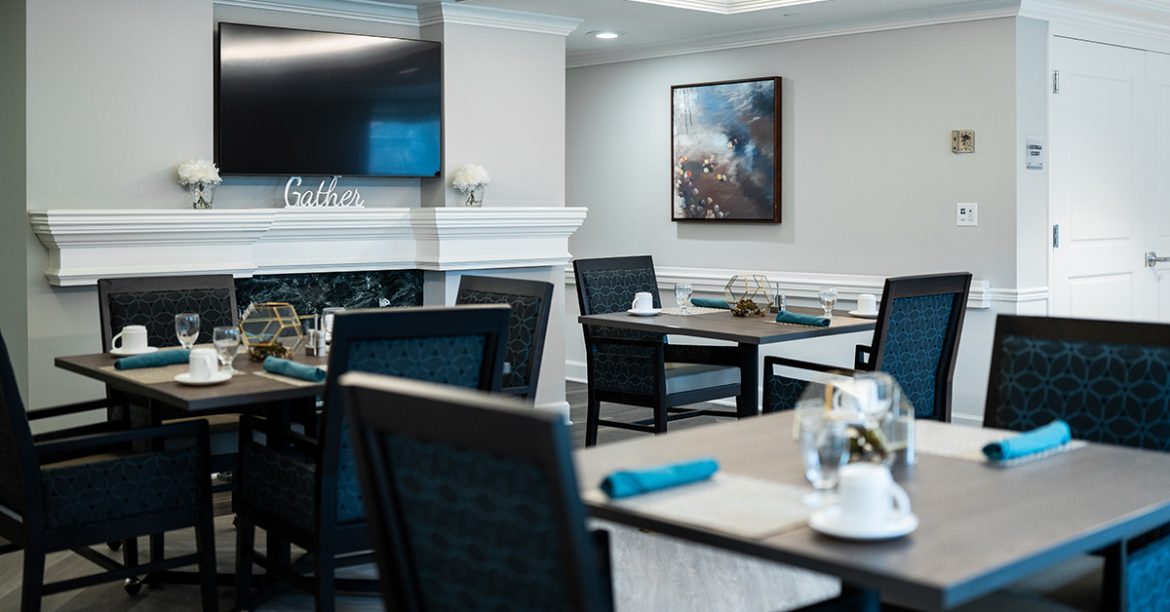
Do the floors, walls, furnishings, and equipment appear clean and in good repair? Are the halls clear, or are they filled with carts of used linens and supplies? Does the air smell pleasant? Is there a safe outdoor area that Residents can access?
Listen, too. Some noise is normal. Many people calling out in distress may reflect understaffing, or Residents whose needs aren’t being met.
The staff
Watch how staff interact with Residents. Do they know people by name, or refer to them as “the patient in room 4?” Do they move quickly from task to task or stop to talk? Notice whether you see the same faces from visit to visit. When staff stay, relationships develop. When there’s constant turnover, care can become impersonal.
Even excellent nursing homes face competition for nurses and aides. What you’re watching for isn’t a perfect record. It’s whether the staff who are there seem engaged and consistent.
Resident appearance
 Are Residents clean, dressed, and groomed? Unkempt Residents are among the clearest signs of insufficient staffing, and something families don’t always think to look for.
Response time
When someone needs help, how long does it take? Sit and watch for a few minutes. This will tell you more about daily life there than any brochure.
Clinical care
What happens when someone’s condition changes at 2 a.m.? Is a nurse in the building or on call? Ask specifically about night staffing. The ratio of nurses to Residents after midnight is often very different from what you see on a Tuesday afternoon tour.
Daily life
 Spend time observing Residents in their daily routines.
Do they seem comfortable and engaged, or are they sitting alone with nothing going on?
Does the place feel calm? If you visit at mealtime, does the food look and smell appealing?
Look past the activity calendar. Are things actually happening or just posted on a bulletin board?
Try to picture your family member there on an ordinary afternoon, not during a tour.
Communication with families
Ask who calls you when something changes, how often families receive updates, and how easy it is to reach someone with a question. You shouldn’t have to chase information.
Ask about the grievance process, too. A well-run facility has one and isn’t shy about showing it.
How staff handle your questions
Do staff answer directly and openly, or get defensive? A well-run facility welcomes scrutiny. If your questions make someone uncomfortable, pay attention to that.
Reputation and track record
Families in Dublin, Worthington, Powell, and nearby communities who have navigated the process of finding a good nursing home are often more candid than any online review. Ask around.
And check Ohio’s Long-Term Care Quality Navigator, which gives you access to state inspection reports and staffing data for any licensed community. Use it before you visit, not after.
What Nursing Care Costs — and How People Pay
 Nursing home pricing is simpler than most senior living models. Facilities charge a daily or monthly rate that covers the room, meals, 24-hour nursing care, help with daily activities, housekeeping, and most routine medical services. Private rooms cost more than shared rooms. Some facilities add charges for things like certain medications, specialized therapies, or supplies, so always ask exactly what’s included.
What varies most isn’t the rate. It’s who pays it.
Private pay. Families pay the facility’s published rate out of pocket until assets are spent down to Medicaid eligibility levels, if the facility accepts Medicaid.
Medicare. For short-term rehab after a qualifying hospital stay, Medicare typically covers the full cost for the first 20 days, then requires a daily copay through day 100. After that, coverage ends. Medicare does not cover long-term custodial care.
Medicaid. For Residents who meet both financial and medical eligibility requirements, Medicaid pays the facility a contracted rate, usually for a semi-private room. The resident contributes most of their income, minus a small personal allowance, and Medicaid covers the rest. Not all facilities accept Medicaid, and eligibility rules are strict. Talk to a benefits advisor before assuming Medicaid is an option.
Long-term care insurance. Policies typically reimburse up to a set daily or monthly amount toward nursing home costs. Veterans’ benefits and certain state programs may also help offset costs in some cases.
Friendship Village of Dublin and other LifeCare or Life Plan communities work differently. Most Residents move into Independent Living under a LifeCare contract, which gives them priority access to higher levels of care, including assisted living, memory care, and skilled nursing.
Direct admission to Alderwood Health & Rehab may be possible when space allows, at the standard private pay rate.
Questions to ask any facility: What does your daily rate include, and what gets billed on top of it? How do you bill for your services?
The Risk of Waiting Too Long
 Moving to a nursing home is seldom a decision anyone wants to make. Many people put off exploring their options. But when a health event finally forces the issue, the timeline compresses.
In a crisis, people focus on what’s available. That usually means less time to evaluate quality and fewer real choices.
The communities worth choosing tend to have waitlists. The ones with immediate openings may not be the ones you’d have picked.
Choose under pressure, and you may end up somewhere that was simply open, not somewhere you would have chosen with more time.
Where to Start Your Search
 You don’t need to have everything figured out before you take a first step.
Talk to your (or your family member’s) physician about whether a nursing home level of care makes sense now or in the near future. That conversation is easier before a crisis than during one.
Visit a nursing home on a regular, ordinary weekday. Watch. Ask the questions that feel impolite. Notice how staff respond to your presence and your questions.
Use Ohio’s Long-Term Care Quality Navigator to cross-check what you saw with what the state has on record.
We’re Here When You’re Ready
At Friendship Village of Dublin, our mission is to care for, engage, and inspire our community to reimagine and maximize the quality of life at every age. That mission shapes everything we do, including sharing guides like this one. Whatever you decide, we hope you feel a little more prepared and a lot less alone.
When it’s time, you can learn more about Alderwood Health & Rehab or talk to our team by calling 614.734.2109.

A Winning Recipe: Friendship Village of Dublin Culinary Team Claims Top Honor at Taste of New Albany

[Updated: August 24, 2026 | Published: August 7, 2026] Delicious.…