[Updated: May 22, 2026 | Published: May 22, 2026]
How Rowan House Memory Care uses the Memory Disco program to help people living with dementia reconnect through music
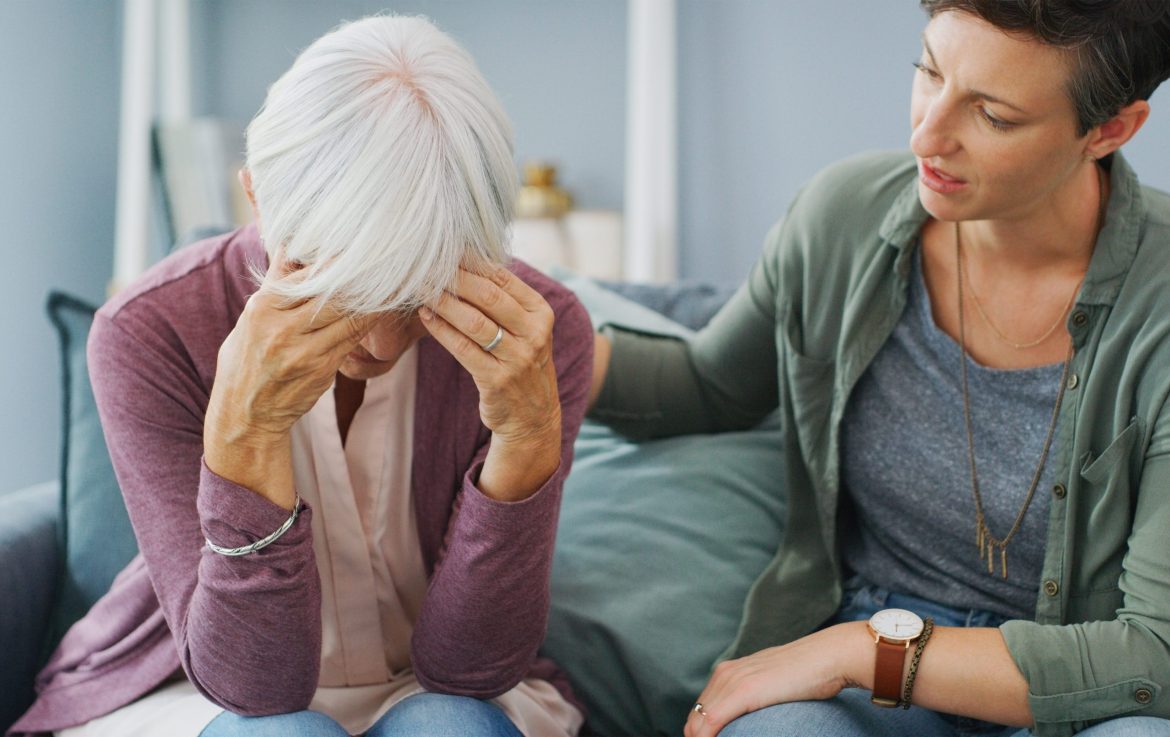
For families living with Alzheimer’s disease or other forms of dementia, one of the hardest losses is not memory alone. It’s communication.
As dementia progresses, language and expression often fade even while emotions remain strong.
It becomes harder to reach the person through conversation alone. They ask the same questions repeatedly. Thoughts seem to drift away mid-sentence. Anxiety and frustration surface through pacing, agitation, or withdrawal.
Certified dementia practitioners in Montessori-based memory care use rhythm, routine, visual cues, touch, sensory engagement, and familiar experiences to help Residents feel safe, understood, and connected as language processing declines.
At Friendship Village of Dublin’s Rowan House Memory Care, music therapy and personalized playlists have proven effective in helping people living with dementia reconnect and feel calmer during periods of distress. A key factor has been the community’s investment in Memory Disco, an innovative music therapy technology and program.
Penny Russell, a Life Enrichment assistant with 17 years of memory care experience, says she has never worked in another community with as many tools available to support Residents.
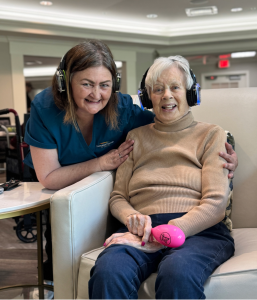
“This is one of the most innovative communities I’ve worked in,” she said. “We have more technology available to support Residents than anywhere I’ve been previously.”
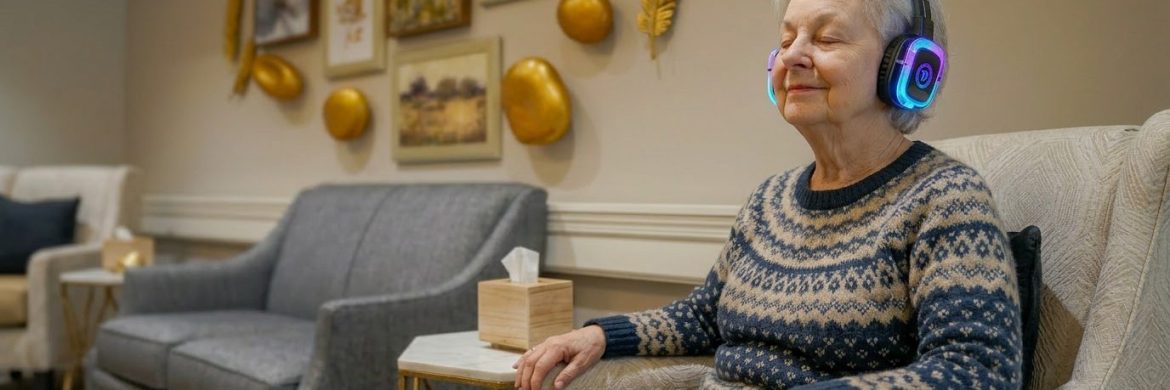
A caregiver settles wireless headphones over a Resident’s ears and searches for the right playlist. Often, it’s Golden Oldies from the 1940s and 1950s, when big band, swing, jazz, and early rock and roll formed the soundtrack of that person’s younger years.
One Resident is, as Russell puts it, “a perfect Frank Sinatra fan.” An associate settles next to her, and “Fly Me to the Moon” begins to thrum through the headphones.
Russell says sometimes the response is immediate. A clenched hand relaxes. A face softens. A Resident who had been pacing sits down and closes their eyes. Sometimes, a foot taps to the song’s beat or a resident’s arms will sway with the melody. Occasionally, someone reaches for an associate’s hand.
How Music Therapy May Help People Living With Dementia
Familiar songs and personalized music therapy can help people living with dementia remain emotionally engaged after conversation becomes difficult.
A 2024 study published in the Journal of Personalized Medicine reviewed existing research on music therapy in dementia care. Researchers found that familiar music played during listening sessions was associated with improved attention and response in some people living with dementia.
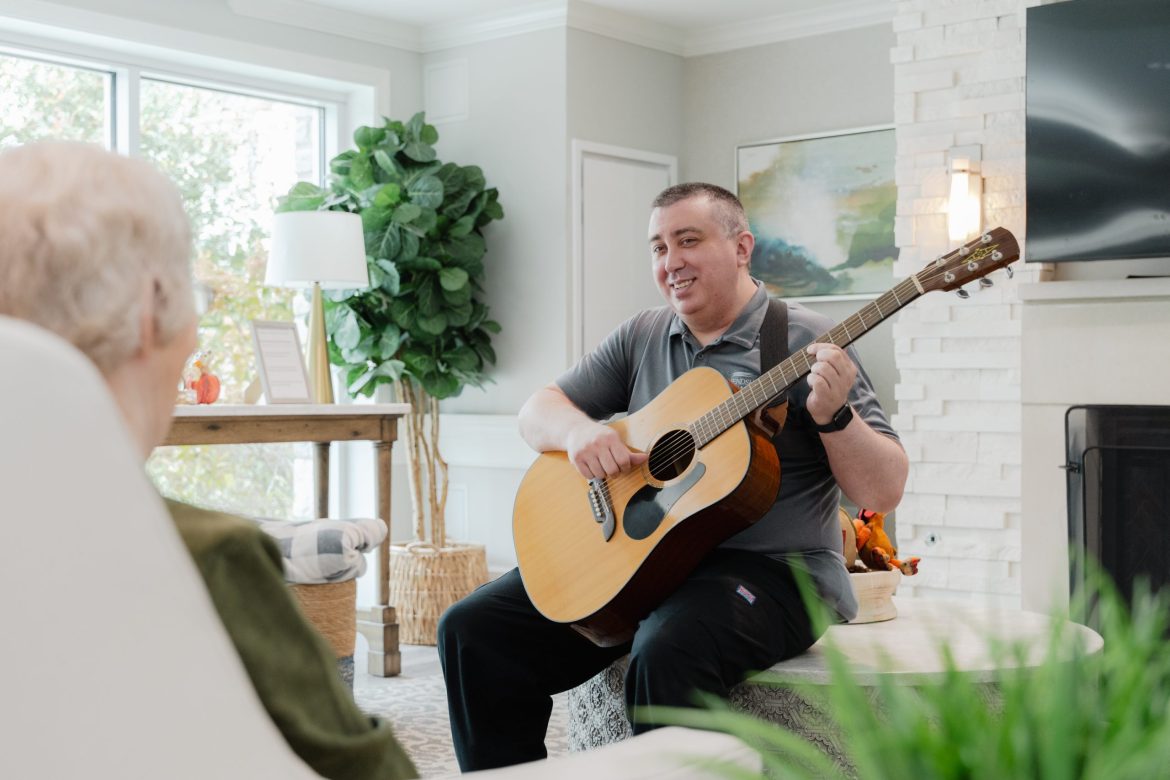
That research foundation is central to Memory Disco. It was created by the Day by Day Project, an Ohio nonprofit founded by two Ohio State neuroscience students studying how music affects memory, mood, and brain function in people living with dementia. Rowan House was one of the first communities to use the program, which now serves more than 20,000 individuals across dozens of Ohio senior care communities.
Rowan House provides Residents with wireless, silent-disco headsets featuring adjustable volume and oversized ear cups that fit over hearing aids. The transmitter can play music on multiple frequencies, so that Residents can stream different playlists simultaneously. One Resident may listen to Sinatra while another prefers classic country, or 1950s rock and roll.
Music played through a television or community speaker often blends into the background, and many people living with dementia struggle to tune out competing noise. Caregivers say Residents seem more engaged when music is played through headphones.
Caregivers at Rowan House say the headphones help reduce distractions, calm anxiety or frustration, and provide another way to connect when conversations become difficult.
The shared listening experience also changes interactions between caregivers and Residents.
“We can put the headphones on ourselves and communicate with them,” Russell said. “You don’t need to talk to have one-on-one personal communication.”
Personalized Dementia Care at Rowan House
Memory Disco is included in the community’s Montessori-inspired memory care programming several times per week. Residents participate with headphones and maracas during group gatherings, leading to spontaneous singing, toe-tapping, swaying, or mutual smiles and laughter.
But caregivers say some of the most meaningful moments happen outside scheduled activities.
The headphones are frequently used during periods of anxiety, emotional withdrawal, frustration, or agitation, especially when spoken reassurance is no longer effective.
“Sometimes she’s just having a bad day,” Russell said of one Resident who regularly requests the headphones. “We’ll ask if she’d like to listen to music. Or we’ll just say, ‘Let’s listen together.’”
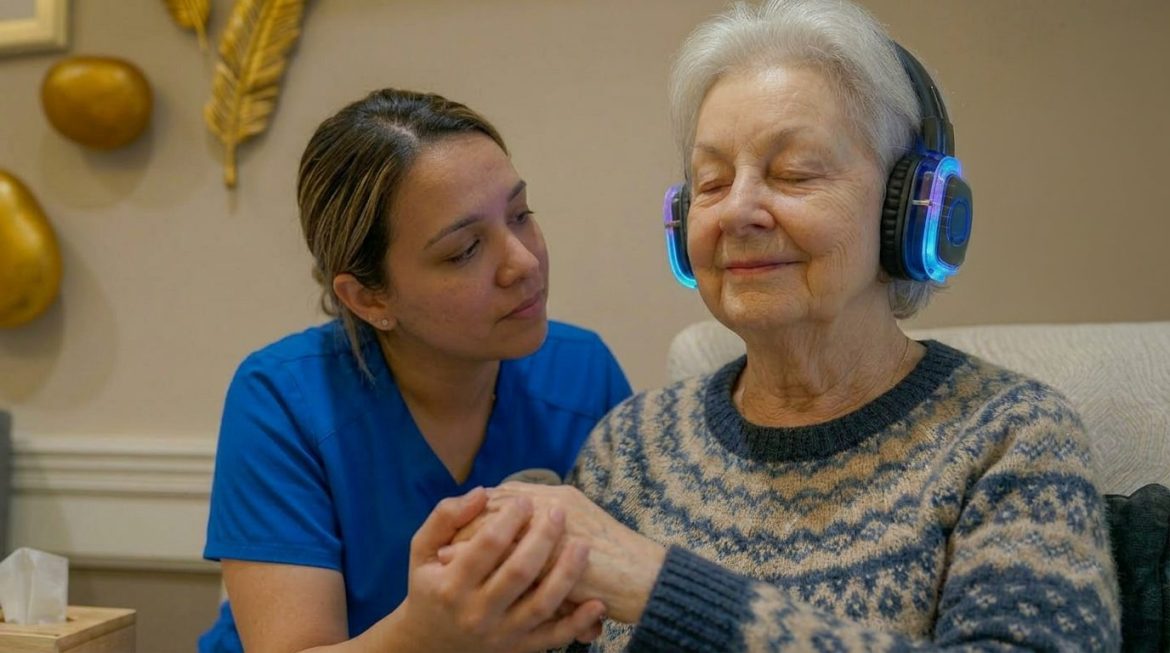
At Rowan House, music is used with intention. Associates identify songs from Residents’ younger years, watch for emotional responses, and draw on familiar music to ease transitions or calm difficult moments.
Over time, many associates begin to build individualized playlists for Residents they know well, searching for songs, artists, or eras that evoke meaningful memories and emotional comfort.
Nancy Thoman, Rowan House’s Life Enrichment Coordinator and a Certified Dementia Practitioner, says personalization changes everything.
“Music reaches memories, emotions, movement, and joy in a powerful way,” she said. “With the headphones, each Resident experiences it in a more focused and personal way.”
The program also changes the caregiving experience itself. Instead of depending only on verbal reassurance during difficult moments, associates have a quieter way to sit beside someone without asking them to keep up with the conversation.
What Families and Caregivers Often Notice First
The results that caregivers observe at Rowan House align with broader findings from the Memory Disco program. In an Ohio study involving 18 care communities:
- 90% of caregivers reported improved Resident mood during sessions.
- 95% observed behavioral improvements lasting four to six hours afterward.
- More than 80% reported greater workplace satisfaction.
- More than 70% said they felt more confident handling behavioral challenges.
Those findings mirror broader research on Montessori-based memory care and other non-drug approaches to dementia care, which have been associated with better mood, engagement, and interaction for some people living with cognitive decline.
Innovation in Memory Care at Friendship Village of Dublin
At Friendship Village of Dublin, programs like Memory Disco are part of a broader focus on practical, person-centered dementia care. Staff members combine training, observation, and individualized support to identify what helps each Resident feel more comfortable and engaged.
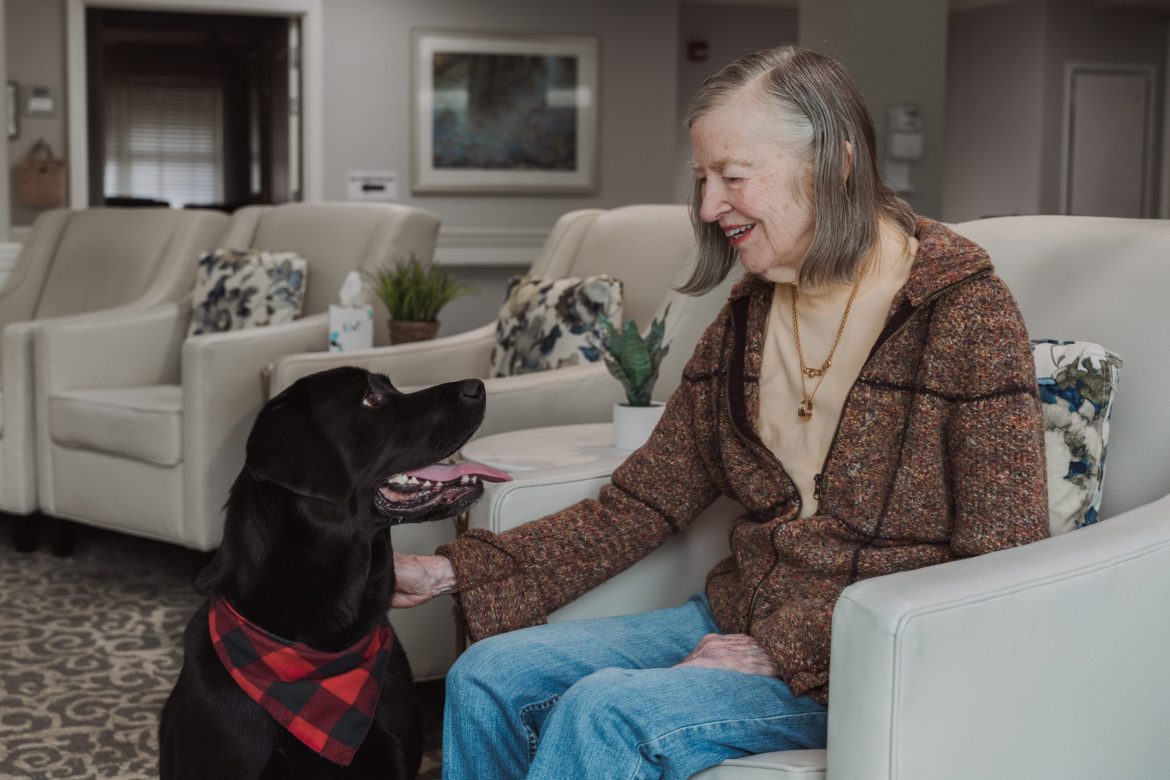
Rowan House holds the Montessori Inspired Lifestyle® Gold Certification, the highest recognition awarded by the Center for Applied Research in Dementia. Leaders design programming around each Resident’s routines, preferences, memories, and emotional responses rather than focusing only on cognitive decline.
The impact often shows up at times that are hard to plan for.
A Resident who had been withdrawn begins tapping to the rhythm. Someone who resisted redirection relaxes into the music. A smile appears.
“Sometimes they reach for my hand just to say thank you,” Russell said. “No verbal communication whatsoever.”
Families often say the hardest part of dementia is not knowing whether a loved one still feels connected to the people around them. Caregivers at Rowan House say familiar music can generate moments of comfort and recognition when conversation becomes difficult.
For families exploring memory care options, Rowan House offers personalized support grounded in connection, familiarity, and compassionate care. We welcome the opportunity to answer questions, share more about our approach, and provide a personal tour of the Friendship Village of Dublin campus.
Call (614) 764-0334 or click the link below to schedule your personal tour.
A Winning Recipe: Friendship Village of Dublin Culinary Team Claims Top Honor at Taste of New Albany

[Updated: August 24, 2026 | Published: August 7, 2026] Delicious.…